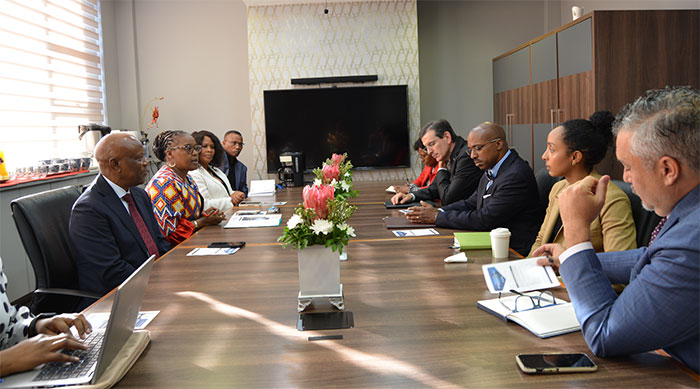
CUT’s engagement with United States (U.S.) embassy is on a positive trail, with a focus on research initiatives at both the faculty and research centre levels. On 24 April 2024, the U.S. delegation visited CUT to explore potential future areas of collaboration. During their visit, they engaged with the CUT executive team, toured the university’s centres, and witnessed some of the innovative projects underway. In her welcome address Vice-Chancellor and Principal Prof. Pamela Dube stated that the institution’s engagement with U.S. institutions extends beyond mere collaborations. “This is a testament to our shared commitment in advancing knowledge and fostering global citizenship.” she said. So far, the university is a member of the Texas International Education Network, forging partnerships with prestigious institutions like the University of Illinois, the University of Western Kentucky, Georgia State University (GSU), and the University of Nebraska. Moreover, new connections have been established with the University of Western Carolina. One significant collaboration involves working closely with Florida International University on an Online Learning project within the Faculty of Humanities, specifically in the Department of Design and Studio Art. Additionally, a diverse delegation from CUT is actively participating in a Tech for Humanity Conference hosted by Virginia Tech University. This participation aims to enhance capacity building at CUT for the establishment of the Tech for Humanity Centre of Excellence. Over the years CUT has been a beneficiary of various U.S. Education funded programmes supporting academic professors, support staff, and student leadership.

Article 4 a: Consul General Vincent Spera, Registrar: Dr Sally Dzingwa, Vice-Chancellor and Principal: Prof. Pamela Dube, Ambassador to South Africa Reuben E. Brigety ii, Prof. Alfred Ngowi, DVC: Research Innovation and Engagement and Jeff Ladenson: Public Affairs Officer.

b: CUT Executives and the U.S. delegates had a round table discussion on possible areas of collaboration.

Author: Refilwe Moleyane

The CUT delegates contributed significantly to the prestigious South Africa Sweden University Forum (SASUF) Research and Innovation Week, which took place from 13 to 17 May 2024 in Sweden. Vice-Chancellor and Principal Prof. Pamela Dube led the delegation, alongside key academic and research figures from the university. SASUF’s core mission is to fortify the connections between South African and Swedish institutions in research, education, and innovation. By fostering collaborative projects, academic exchanges, and joint initiatives, SASUF has become a catalyst for knowledge sharing, capacity building, and interdisciplinary research. The SASUF Research and Innovation Week serves as a collaborative platform, bringing together researchers, educators, students, and university leaders from 40 partner universities across South Africa and Sweden. The event features two days of Satellite events across the host country, followed by a three-day Sustainability Forum, during which the CUT delegation robustly participated and engaged in joint workshops.

Article 3 a: Ms Shelly Mona presented on the topic of Smart Additive Manufacturing in the Automotive Industry: The Path to Digital Value Chain, highlighting the university’s innovative research in this field.

The delegation included Prof. Alfred Ngowi, Deputy Vice-Chancellor: Research, Innovation and Engagement; Dr Deliwe Dee Mongalo, Dr Abidemi Ojo, and Dr Zenzile Khetsha from the Faculty of Health and Environmental Sciences; Dr Olutunmise Ojo from the Faculty of Humanities; Ms Itumeleng Kgololo-Ngowi from the Faculty of Management Sciences; Dr Izabeth Conradi from the I-GYM; and Ms Shelly Monaand Mr Julian Nwodo from the Faculty of Engineering, Built Environment, and Information Technology. Ms Pontso Letuka, SASUF Student Chapter Leader, and Ms Refilwe Moleyane, CUT SASUF Coordinator from the Center for Global Engagement, accompanied the delegation.

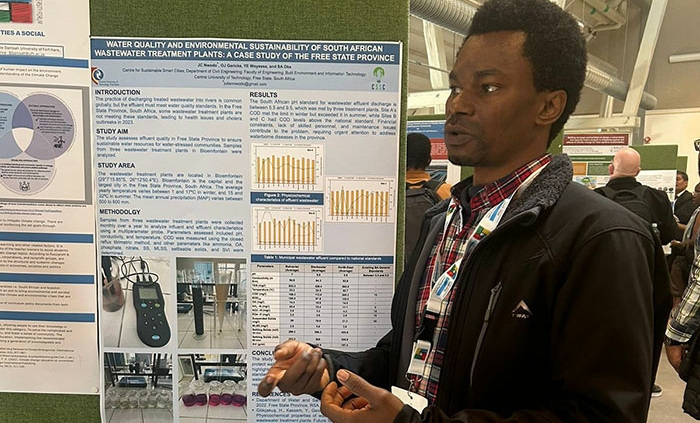
Article 3 b: Mr Julian Nwodo from the Faculty of Engineering, Built Environment, and Information Technology Presented on Water Quality and Environmental Sustainability of South African Wastewater Treatment plants: A case study of the Free State Province.

Author: Refilwe Moleyane

The university has been actively forming strategic partnerships with international universities in various academic and research fields. Recently, a university delegation participated in the Innovation and Sustainability Forum in Sweden on 13-17 May 2024, where our researchers and academics addressed numerous satellite events.  They showcased their work through workshops and session presentations, reaffirming the university’s active and robust engagement. Vice-Chancellor and Principal Prof. Pamela Dube played a pivotal role in the SASUF Leadership Forum, chairing strategic sessions to redefine the vision for SASUF 2025 – 2030. Prof. Ngowi also led discussions on how CUT can further contribute to scientific advancements within the SASUF network.

The South Africa—Sweden University Forum (SASUF) has established itself as a cornerstone of academic collaboration since its inception. As the partnership eagerly looks forward to its next phase from 2025 to 2030, the focus will be on expanding successful initiatives such as Research and Innovation Weeks and seed funding calls. New focus areas and scientific themes, informed by collective experiences and evolving global needs, are set to guide future efforts in advancing the SASUF collaboration. CUT’s involvement in SASUF exemplifies the university’s commitment to international collaboration and innovation, enhancing its faculty and students’ academic and research experiences. The relationships and projects born from this partnership promise to drive significant advancements in various fields, reinforcing the role of higher education institutions as global leaders in research and innovation.

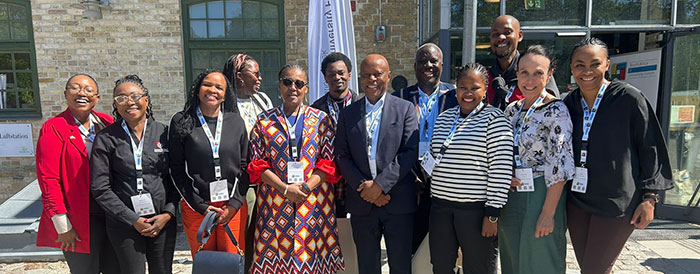
Article 2. CUT delegation who represented the university at the South Africa Sweden University Forum (SASUF) Research and Innovation Week in Sweden. The team was led by the Vice- Chancellor and Principal, Prof. Pamela Dube (front row, 4th from left)

Author: Refilwe Moleyane

From graduating with a Bachelor of Medicine and Bachelor of Surgery (MBChB) from the erstwhile University of Natal in 1982, to serving UKZN as the second Chancellor from 2009 to 2017, graduating again at the age of 68 is no mean feat for Dr Zweli Mkhize who was awarded a Master of Administration at a Graduation ceremony in May.

Service Delivery at the Provincial Sphere of Government: A Case Study of Operation Sukuma Sakhe (OSS) in KwaZulu-Natal was the title of Mkhize’s study under the supervision of UKZN public governance specialist Professor Purshottama Reddy.

During his tenure as the Premier of KwaZulu-Natal from 2009 to 2013, Mkhize observed that local government was plagued by ineffective service delivery, mainly due to poor co-ordination, power contestations caused by overlapping constitutional mandates, a lack of co-operation and poor alignment of state entities. In response to these challenges, the provincial administration under Mkhize’s leadership introduced the Operation Sukuma Sakhe (OSS) model in an effort to improve service delivery and eradicate structural poverty and inequality in the province.

He said that he decided to focus his research on the OSS model as during his time as premier, the project attracted a large number of scholars: ‘A number of masters and doctoral theses were produced and the OSS model formed a foundation for the District Development Model implemented by national government.’ As an avid scholar, he was keen to contribute to this body of research.

Commenting on his journey Mkhize said: ‘It was a challenging but rewarding journey. I personally interviewed all 22 respondents during the difficult days of COVID-19 with restrictions while balancing it with all other demands and responsibilities of the time.’

The study revealed various shortcomings in service delivery despite the effectiveness of the OSS model. The lack of common understanding of the policy led to inconsistent application, as well as changing emphasis on each programme when leadership changed. ‘The study highlighted many subjective and objective factors that affect our public service such as poor and uncoordinated planning and budgeting and poor implementation of programmes as well as poor supervision and a lack of community consultation to address community discontent,’ he said.

Mkhize has had an illustrious career in politics as an anti-apartheid activist and also served as the Minister of Health and the Minister of Cooperative Governance and Traditional Affairs, amongst many other high-profile portfolios in government.

‘I have had extensive experience in public administration since the dawn of democracy. During this era, practitioners had the innovation, creativity and ability to explore new approaches and solutions to address challenges that had not been experienced before.’ He added that the OSS model was one such solution that developed organically but was not preceded by in-depth academic research on the concept.

A firm believer in continuous education, he said: ‘Senior public administrators should be engaged in continuous learning and academic research as they would acquire new knowledge that bolsters their experience to improve their performance.’ Academic advancement would enable public administrators to contribute to generating new information in their field of practice and create an environment that deepens professionalism and improves service delivery.

On his achievement Mkhize said he feels fulfilled and is grateful to his family, peers and supervisor for their inspiration throughout his research journey. ‘I hope this will inspire younger generations, leaders and public servants to embrace postgraduate education and pursue ever-widening horizons in academic research,’ he commented.

Reddy congratulated Mkhize on his achievement, describing him as an exemplary student: ‘It was a pleasure working with Dr Mkhize because he is hard working, co-operative and willing to contribute to the knowledge base in the field of public governance.’ Mkhize and Reddy have started sharing their research as co-authors of two chapters in two books – one on management of the COVID-19 pandemic as part of an international study and another on service delivery at the provincial sphere of government with a focus on OSS.

Words: Hazel Langa

Photograph: Sethu Dlamini

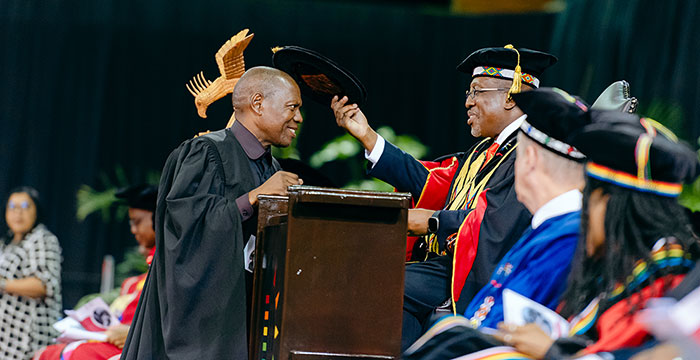
Caption: UKZN’s Vice-Chancellor and Principal, Professor Nana Poku, caps former UKZN Chancellor, Dr Zweli Mkhize, who graduated with a Master’s in Administration.

Published 9 May 2024

Growing up with a disability or in a difficult environment should not be a barrier for people to achieve their dreams, says wheelchair-bound Ms Zinhle Khumalo who graduated with a Postgraduate Diploma in Human Resources Management (HRM) with distinction.

Khumalo was previously awarded her Bachelor of Social Sciences summa cum laude.

At the age of five, she was diagnosed with Juvenile Rheumatoid Arthritis, an autoimmune disorder that caused her health to deteriorate and resulted in the permanent use of a wheelchair. She hopes her achievement will be an inspiration to all those living with a disability who want to achieve their dreams.

Raised by a single mother, Khumalo says she is grateful and blessed that she did not keep her behind closed doors, but treated her the same as her siblings and encouraged her to make the most of life.

‘What keeps me going is the support I get from my mother and siblings and the dream that one day, I can get us out of poverty. Living with a disability is complex and expensive. Every day, I have to face a new challenge, but I have managed to do well academically,’ she said.

‘Studying HRM gave me insights into human behaviour in organisational contexts. I can apply this understanding in HR roles and leadership positions where managing people and teams is crucial. HRM professionals must be adaptable and resilient, especially in dynamic environments where organisational restructuring, workforce diversity, and regulatory changes are the order of the day,’ she added.

Khumalo is a member of the Golden Key International Honour Society and has now set her sights on obtaining a master’s degree.

Words: Lungile Ngubelanga

Photograph: Supplied

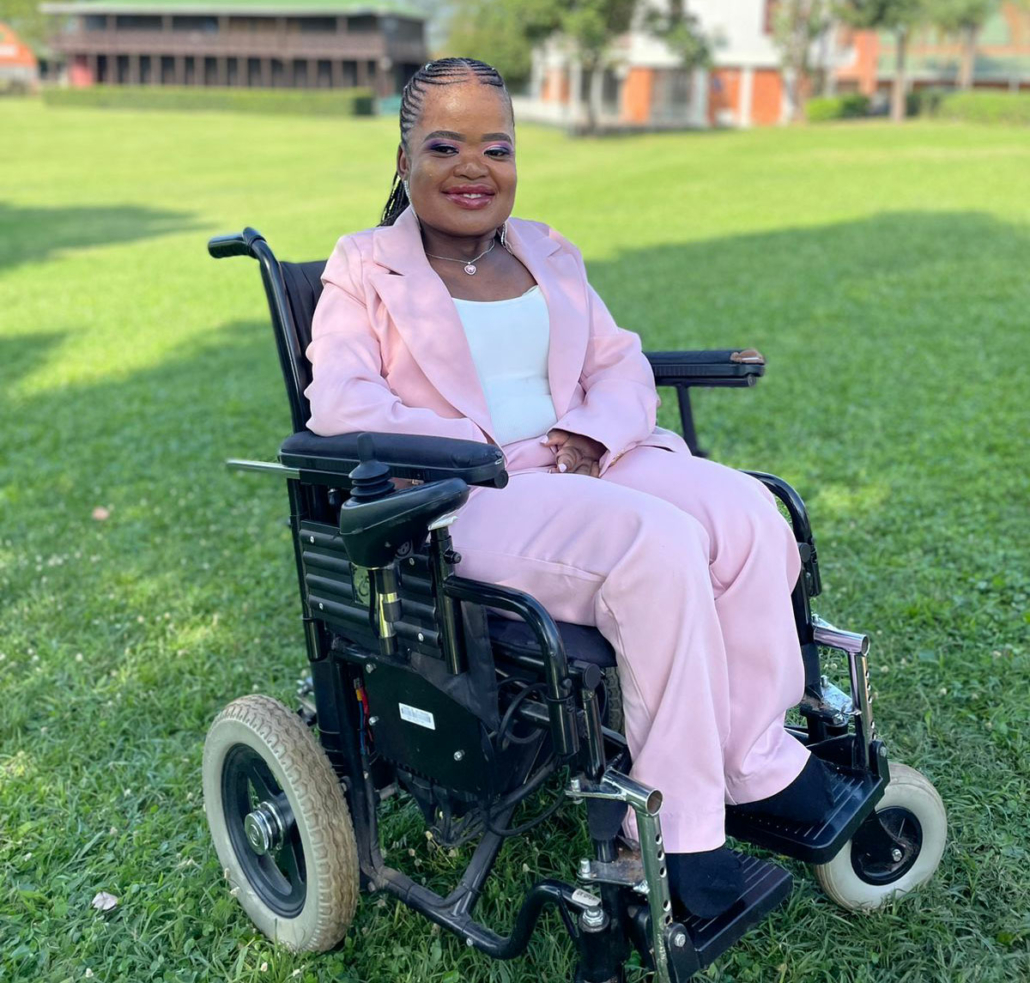
Caption: Ms Zinhle Khumalo.

Published 9 May 2024

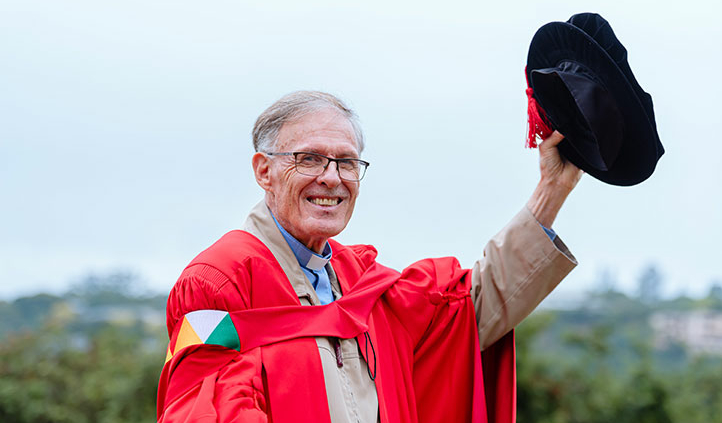
Inspired by a deep sense of purpose and guided by the Holy Spirit, UKZN’s oldest graduate at the 2024 Autumn Graduation ceremonies at 74, Parish Priest Pierre Goldie’s academic journey culminated in an investigation into the evolving perception of sacred power among Black, urban, isiXhosa-speaking Catholics within the Catholic Archdiocese of Cape Town.

Graduating with a Doctor of Philosophy in Catholic Theology, Goldie’s thesis critically discerns the image of God in relation to ancestral figures amidst ongoing cultural change.

According to Goldie, the research sought to understand the appropriation of Catholicism, and evaluate its success and challenges within this context. Focused on identifying sources of sacred power, he examined how perceptions of “God” have shifted over time, and the implications for religious consciousness.

Central to his findings is the displacement of ancestral figures from their dominant role by the figure of “God” within the urban isiXhosa-speaking Catholic community. While the ancestors historically held primary sacred power, “God” now commands religious consciousness, albeit with continued reverence for ancestors. He added that the conspicuous undervaluation of the Christ figure is theologically challenging, especially for the Catholic Church.

The study considers the dual religious system at play, where parishioners navigate both African indigenous beliefs and Christianity for existential solutions. It enriches understanding of religious identity and sacred power dynamics within contemporary African Catholic communities.

To navigate the complex interplay between African traditional beliefs and Catholic practices, Pierre employed a meticulous methodology rooted in Catholic criteria while validating indigenous notions of sacred power as far as possible, according to Catholic criteria.

‘The significance of displacing ancestors underscores a fundamental transformation within Catholicism, and Christianity in general. “God” now offers a closer, more accessible source of sacred power, challenging the distant, intimidating perception of the divine prevalent in African traditions,’ he said.

Aware of his own conditioning ‘biases’ and lens which he guarded against in his study, Goldie appreciates the importance of culture and the fact that indigenous people view the world through their own cultural lens, and are encumbered with their own existential problems for which they look for resolution from both indigenous religion and Christianity, whichever yields positive outcomes.

He said that this calls for deeper appreciation of cultural nuances within religious discourse, and hopes his study will influence conversations within the Catholic Church and academic circles to bridge cultural gaps and rekindle meaningful engagement with African contexts.

Reflecting on his academic journey amidst his parish responsibilities, Goldie emphasised the importance of ethical considerations and prayerful guidance in theological research, expressing gratitude to God, his two supervisors, and Professor Paul Decock and the late Professor Stuart Bate; the Cape Town Archdiocese Archbishop and Cardinal Stephen Brislin, all the South African contributors to the field of indigenous culture and religion, and the many missionaries and priests in the Catholic Church.

Words: Rakshika Sibran

Photograph: Sethu Dlamini

Caption: Cheers to Dr Pierre Goldie who graduates at 74!

Published 15 May 2024