By US

“While commemorating Africa Day on 25 May annually, we reflect on the common challenges the continent face and celebrate the progress Africa has made since the early 1960s. This year, the COVID-19 pandemic wreaked havoc at a global scale, with the full impact of the pandemic which will only become evident over time” explains Dr Nico Elema, manager of the Centre for Collaboration in Africa at Stellenbosch University International. Nevertheless, on 25 May 2020, Stellenbosch University (SU) again participated in the annual Africa Day celebrations, albeit online this year. The day was launched with email communication to the SU Africa Platform community, highlighting a message from Prof Hester Klopper, SU Deputy Vice-Chancellor Strategy and Internationalisation, which drew attention to some of our collaborations with other African partners in response to the COVID-19 pandemic.

The day was followed by an opinion article published in News24.com titled Africa Day: A continent united in the battle against Covid-19, by Dr. Nico Elema. Dr. Njeri Mwagiru, a Senior Futurist at the Institute for Futures Research (IFR) addressed audience in a webinar organized by the Durban University of Technology, presenting on the Impact of a Global Pandemic on the Africa Agenda 2063. The SU Africa Platform community was invited to participate in the full-day online event with the theme: COVID-19 and Africa’s Future Development: Challenges and Opportunities. The event was organized by the Department of Science and Innovation (DSI), the African Union, the Human Science Research Council (HSRC). A video was also made available which captures SU partnerships with other African Universities and Research institutions

While we celebrated Africa Day 2020 in a different capacity, the initial wave of COVID-19 cases swept across the continent, with various countries looking at institutions of higher learning to also respond to the crises. Responses from Universities varied and were characterised by innovation, resilience and unity – attributes which will see us through 2020 and into 2021 as we move beyond our circumstance.

Dr. Elema highlights that “it is important for SU as world-class university on the African continent, to commemorate Africa Day with various role-players on the continent. It keeps us rooted to our continent and provides us with a specific opportunity to engage with our university community on matters related to the continent.”

Given the COVID-19 pandemic of 2020, one can reflect on activities SU is involved in with other African Universities – see here: http://www.sun.ac.za/english/AfricaSU/covid-19/covid-19africaprojects
The Office for International Education had to do all of their events as online events due to the coronavirus pandemic. The Public Relations department has embraced the digital era by producing online events in place of our usual face-to-face strategy. The COVID-19 lockdown has restricted the international office from celebrating Africa Week like it has been celebrated in the past.

To celebrate Africa Week the Office for International Education has conducted a lot of research about Africa and the many countries within Africa. Many of the International students are from Africa, the aim was to mostly include countries where the office has students from.

Africa is divided into North, South, West, East and Central Africa. Each day of the week was focused on one of the regions of Africa.

Social media platforms were our main focus for this event. Visual methods such as online social media post designs and educational posters were used for the week long online event. Did you know facts and quizzes was posted on social media daily to educate international and local students about Africa and the many different regions.

The quizzes we conducted on our social media platforms allowed for some interaction for our followers. The “did you know” posters educated our followers on certain countries of each of the regions from Africa.

The office had a competition for the best dressed “African inspired” attire. The aim was to get students involved and allow them to dress up to take a picture and stand a chance at winning one of the prizes.

Robert Kotzé, Senior Director, SU International, Stellenbosch University

rk@sun.ac.za

International mobility is being challenged as one of the cornerstones of internationalisation of Higher Education. It suddenly became a remote idea with student exchanges and Study Abroad programmes being cancelled. It became something with constantly moving goalposts: from perhaps, possible, depending and then all ended with in the dreadful regrettably cancelled.

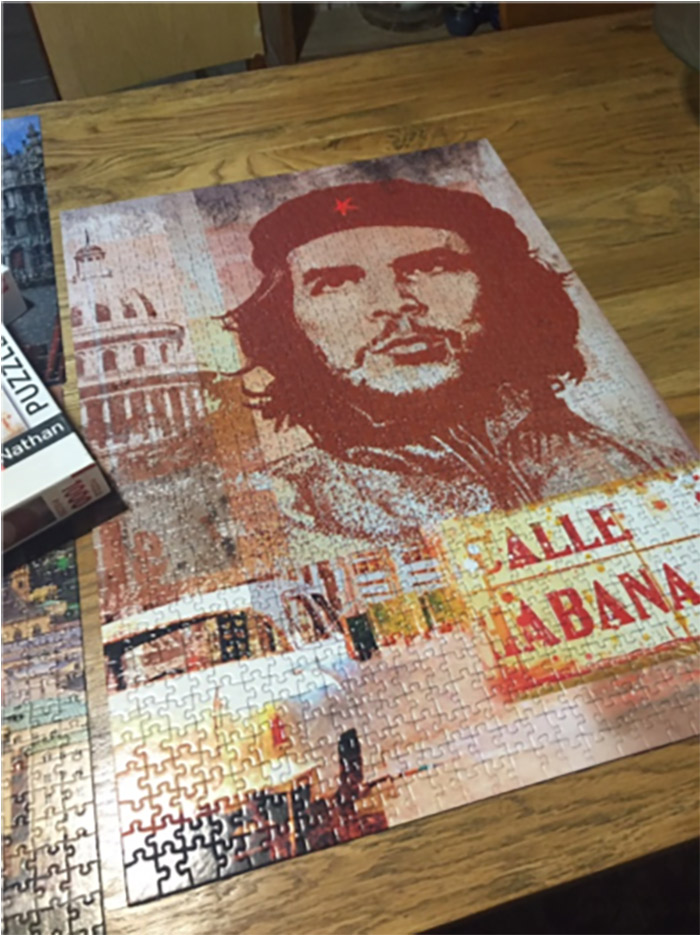
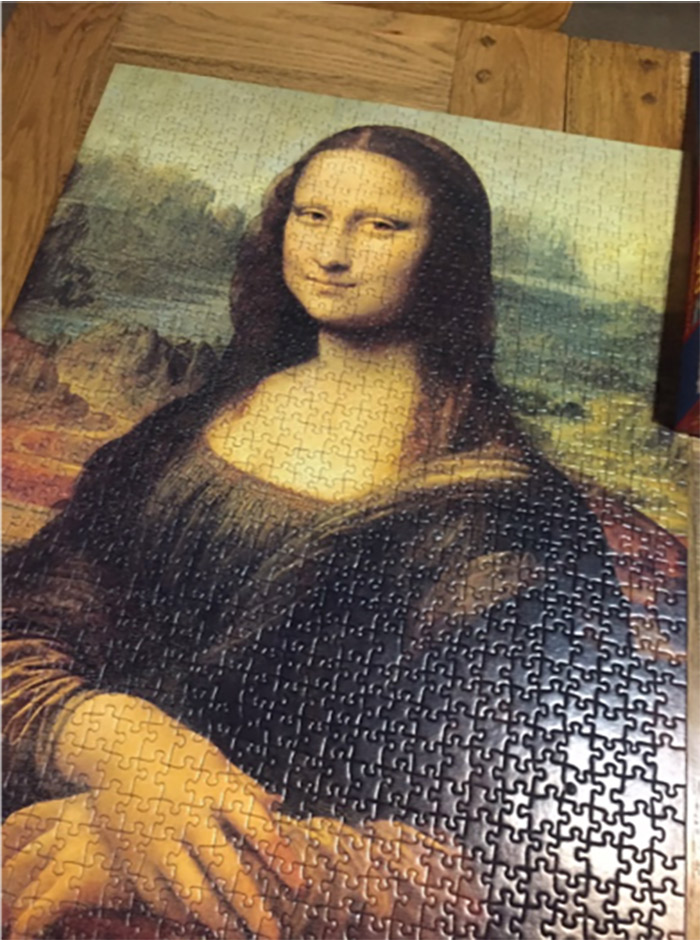
During the initial stages of lockdown, I have rediscovered a family hobby – building puzzles – scratching through the 1000 pieces for the frame, then the roofs, rivers, trees, people and then, usually, struggling with the blue sky or clouds. Through this puzzling journey, I managed to visit Bled (Slovenia), Brussels, Leipzig, Paris, Amsterdam, Venice, stayed in Chequers Inn, Norfolk in the UK and then ended up visiting the Karlstein Castle close to Prague.

During my travels I also encountered Che Guevara and Mona Lisa:

At SU International we see ourselves as internationalisation practitioners – colleagues who actively engage, respond and take action to integrate an international, intercultural and global dimension into the university community. It is transformative, changes perspectives and adds value to the individual and the institution. Even more, it changes your own take on matters and encourages you to continue with the daily administration, answering difficult questions and thinking more creatively. This is where the words of Guevara about motivation and work inspire:

This is not a matter of how many pounds of meat one might be able to eat, or how many times a year someone can go to the beach, or how many ornaments from abroad one might be able to buy with his current salary. What really matters is that the individual feels more complete, with much more internal richness and much more responsibility.

Amongst all the challenges, it is at the end about the individual feeling more complete and still how we as SU International, as internationalisation practitioners, add value to the lives of others. Our task is to inspire fellow colleagues in our institutions to also become internationalisation practitioners – to think international, intercultural and global when creating institutional processes or when designing new academic programmes….

The ongoing effects of the pandemic are continuously shattering lives, livelihoods and dreams – everything feels like the 3000 pieces of a big puzzle – overwhelming when you open the box. But it is possible to get going – look for the frame, the roofs, rivers, trees, people … and when you get to the sky and the clouds that seem “impuzzable”, you click into your networks: local and international colleagues, bilateral partners and interest groups to get the interlocking going….

This is where my Mona Lisa puzzle encounter comes in – a Da Vinci painting on a poplar plank – not a canvas. She cannot be bought or sold – priceless. “With his Mona Lisa, Leonardo created a new formula, at the same time more monumental and more lively, more concrete and yet more poetic than that of his predecessors.” How do we reframe our internationalisation efforts to be more monumental, lively, concrete and poetic…..?

Puzzling together a new way of internationalisation will still have the core elements: the roofs, rivers, trees and the people. Joint research collaboration will be different, but will still have its value in joint publications. Joint academic programmes will be more virtual, but still have the add-on value through the certification and personal growth. The content of student programmes will be more global in its core, but stripped of officialdom and waiting at check-in counters. The new internationalisation puzzle might even be without a frame – endless sky and clouds – a recovery of nature and return to core basics……

I invite you to join us at SU International to piece together the new internationalisation realities, to patiently explore new possibilities and to actually enjoy the hopefully greener route and bluer sky….

On South African mineral heritage

By Richard Harrison, University of the Western Cape

South Africa, and Southern Africa by extension, is well known in the circles of mineral collectors, and the general public, for a wealth of exceedingly rare and stunning minerals – Indeed, several universities across South Africa often declare new species at both micro and macro scales.

What one forgets is how integral this is to our natural heritage, and often the growth of small communities in South Africa. Aside from the big mines and stunning newsreels, what about Pella?

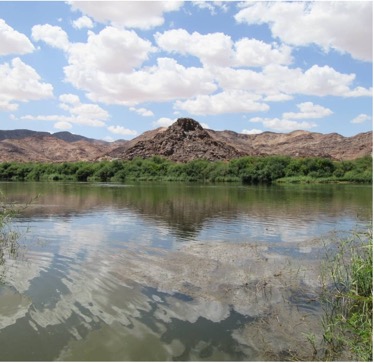
Pella is a small town in the Northern Cape, almost bordering on Namibia. Those of you that have heard of it before might remember fondly the date farms, exporting some of the world’s finest.

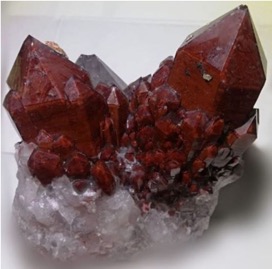
However, there is another story to tell – The surrounding veld (Severe in its natural beauty) brings a small additional income for many of the local families, some of whom have lived in the area for generations. Not from the soil, but from the hard rock beneath – Stunning quartz crystals (Pictured below) included with hematite, termed a phantom. Indeed, the area is known to produce amongst the best in the world, and many are on display in national museums overseas.

There are many such stories – From the history of the fabled Jan Coetzee mine near Springbok, producing some of the most amazing, complex crystals to Ajoite, an extremely popular mineral often included in quartz and found almost exclusively from mines around Musina, a small town in the Limpopo province.

Hematite included quartz, Pella, South Africa. Author specimen and photograph.

One also can’t discuss our mineral heritage without reference to the Kalahari Manganese Fields – Perhaps you have driven through Postmasberg, and seen every sign and streetlight covered in the red dust from the iron mines, or passed briefly by some of the mines and wondered where all the trucks are off to!

Namibia, as seen from Pella. (Namibia is over the river). Author photograph.

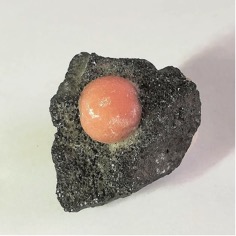
N’Chwaning (And by extension, N’Chwaning II and III) have over the years produced many new minerals, only found in South Africa – From Olmiite, an extremely rare silicate, to Rhodochrosite – Indeed, for the latter South Africa produces arguably the best in the world, with the widest range of habits! The nearest competition for Rhodochrosite of similar quality in the United States! Sadly, one is hard-pressed to find a full display of these open to the general public in South Africa. Sugilite is another Kalahari mineral that is world famous – And part of our mineralogical heritage.

Olmiite, N’Chwaning II. Author specimen and photograph.

One forgets, when the rare occasion arises to see some of these minerals (And there are many, many more!) the sheer dedication required to bring them to the light for the world to see – The stark environments, high mountains without trails or paths or often the distances needed to bring them to major cities and centres.

At this point you, as the reader, are no doubt wondering what the point of this piece is – And I shall put it simply: When you next walk through a museum, or see minerals tagged as South African – Don’t forget that they are also part of our heritage!

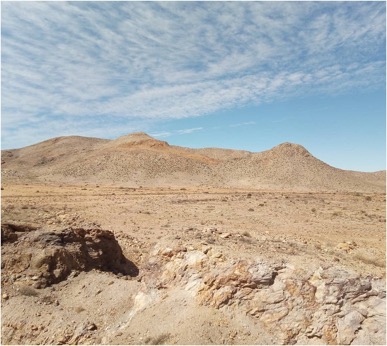
A site in the Northern Cape known to produce stunning crystals – Author photograph.